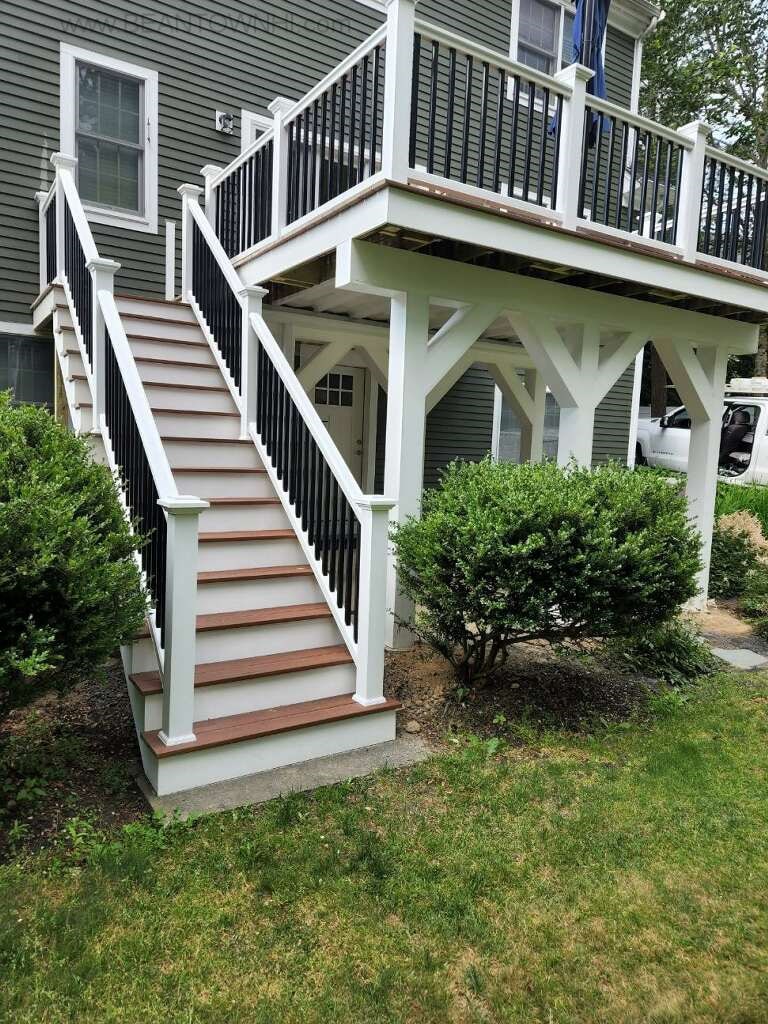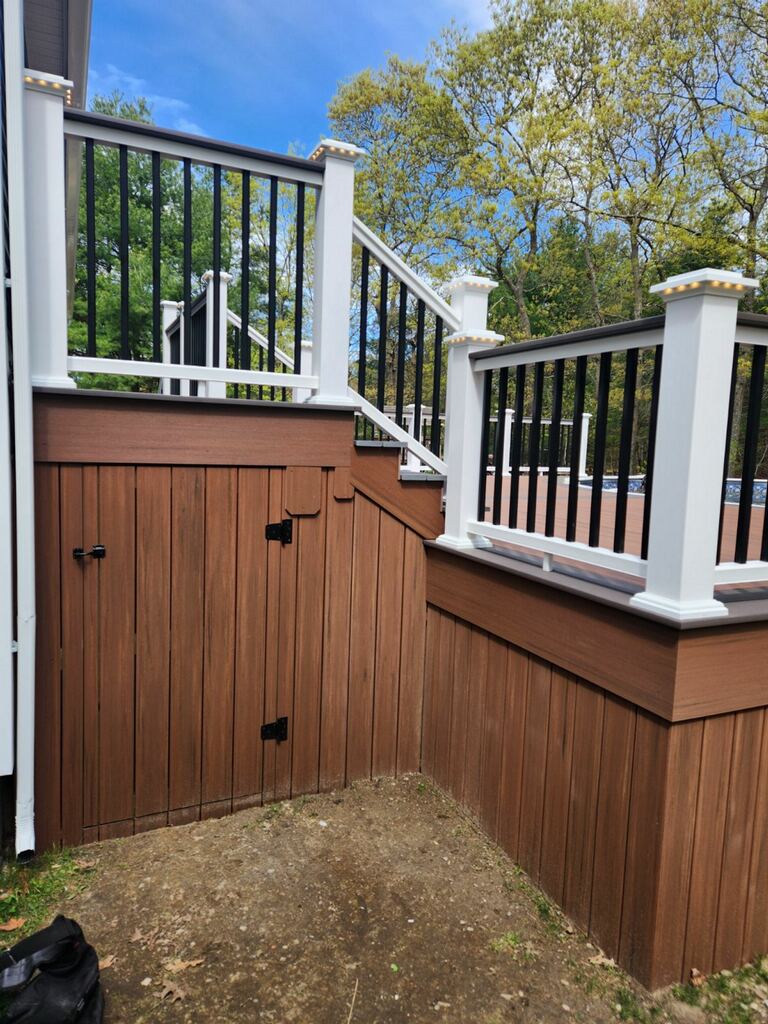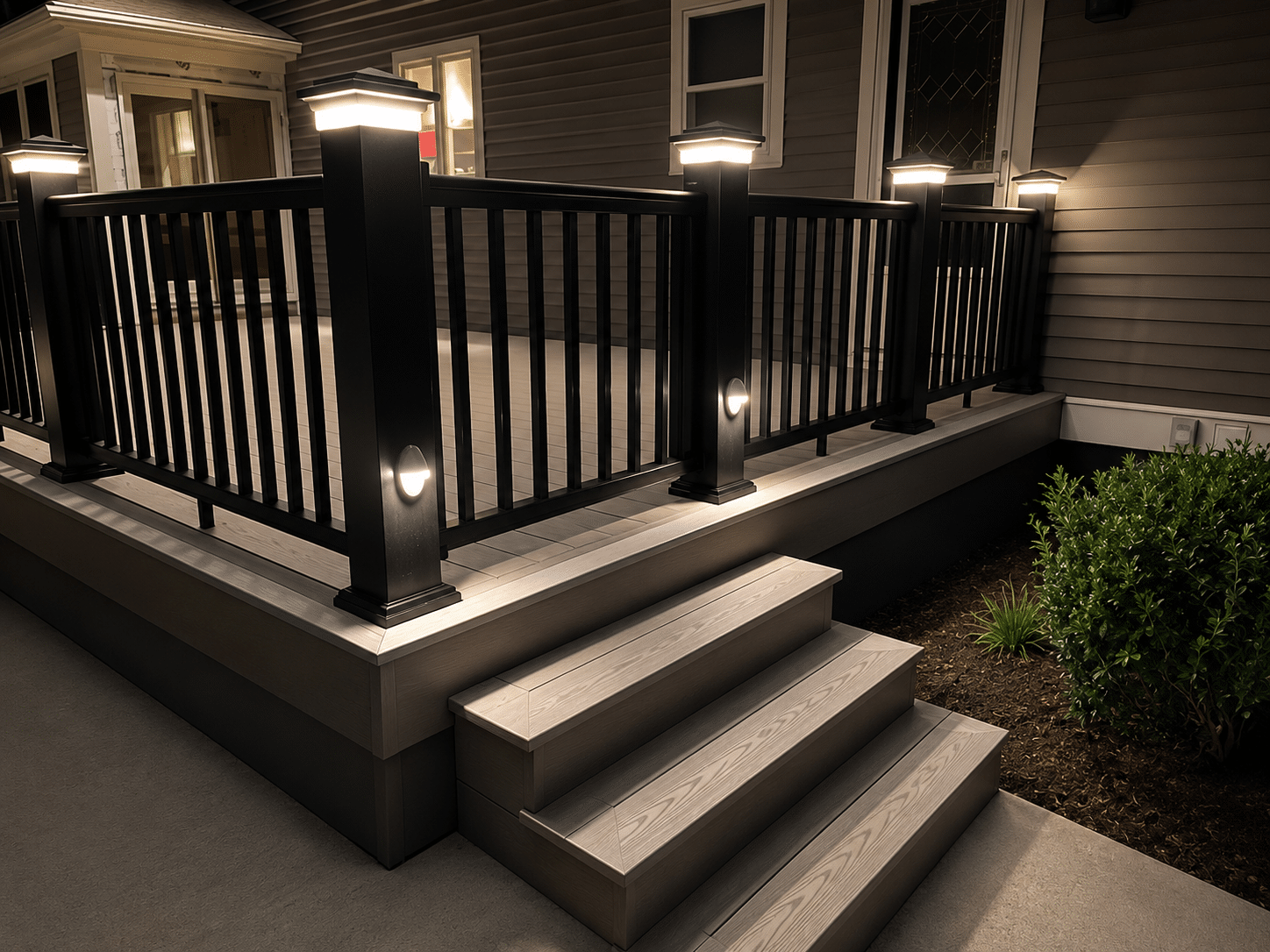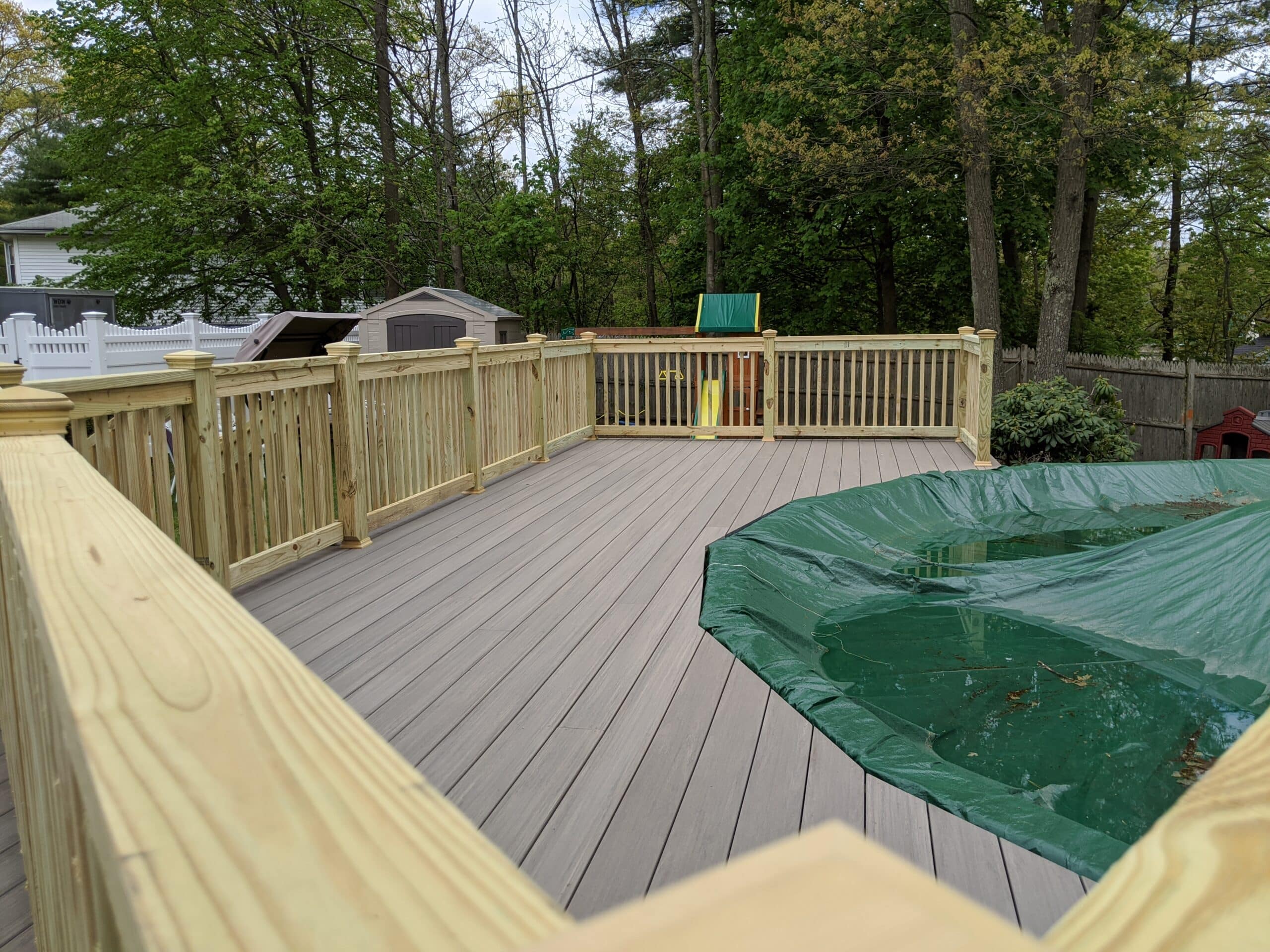
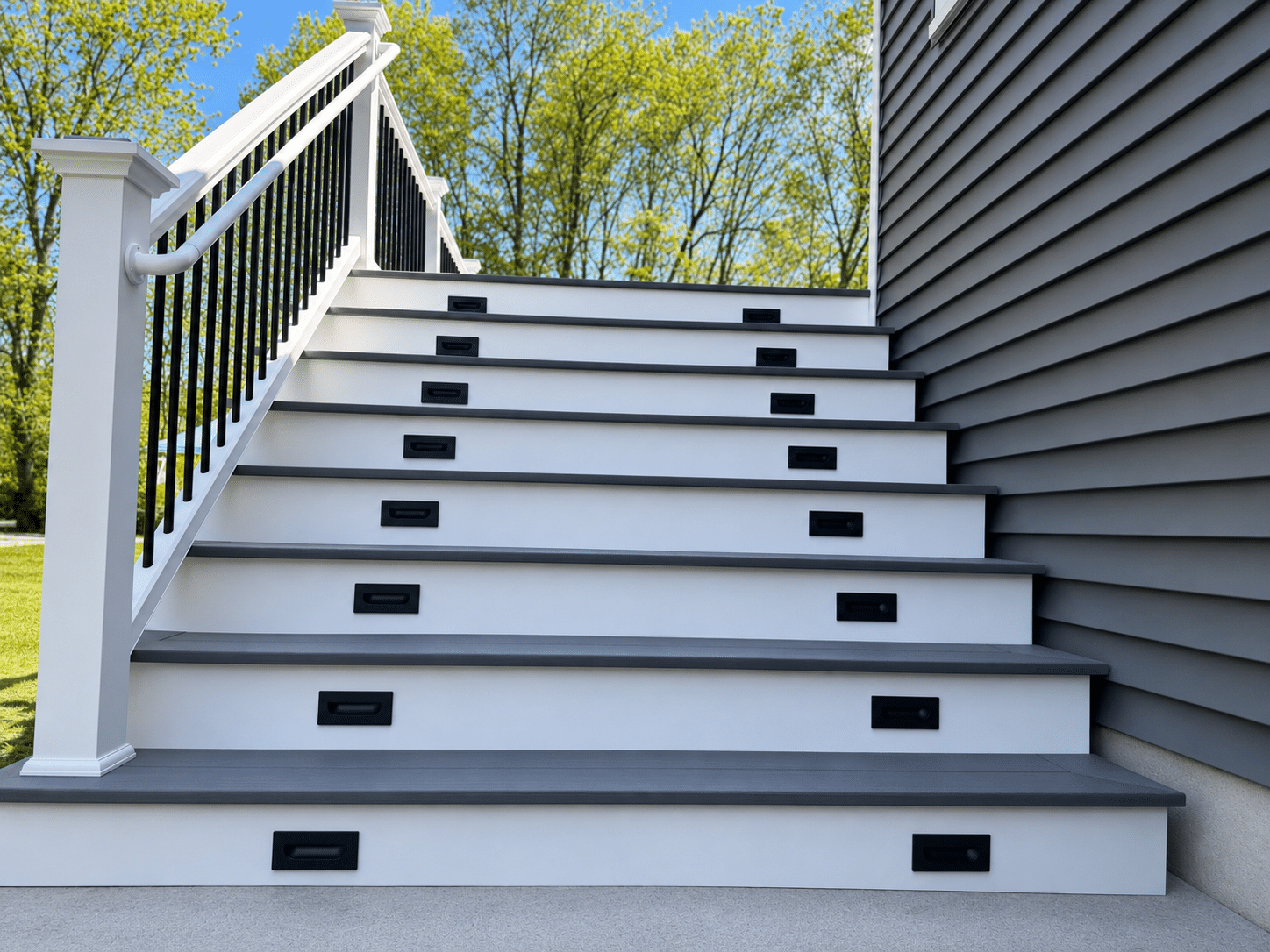
Deck Building & Replacement
Massachusetts Deck Builders — PVC, Pressure Treated & Hardwood, Built to Last
DelPrete Home Improvements designs and builds decks across Eastern Massachusetts — complete replacements and brand-new builds in AZEK & TimberTech capped composite, Wolf PVC, traditional pressure-treated lumber, and genuine Mahogany and IPE hardwood. Every deck sits on an engineered, code-compliant frame, with no pressure, transparent pricing, and a finished result built to handle decades of New England weather.
- Fully Licensed & Insured
- Built to MA Code
- 550+ Five-Star Reviews
- Fully Licensed & Insured
- Built to MA Code
- 550+ Five-Star Reviews
AZEK Platinum Contractor
Top-tier TimberTech & AZEK installer
Wolf Pro Contractor
Certified Wolf decking & railing installer
Guild Quality Award Winner
Yearly winner of best remodeler in Mass
Licensed & Insured
Massachussets CSL-107322 & HIC-178728
What We Offer
Deck Services
Whether you’re refreshing a deck with a still-solid frame, building a brand-new outdoor living space from the ground up, or putting in a pool deck with its own code requirements, DelPrete Home Improvements has you covered. Our services include deck refreshes, new deck construction, and pool decks — plus the railings, lighting, and finishing details that turn a deck into a place you actually want to spend time. Every project is engineered and built to the Massachusetts Residential Code, with quality materials and craftsmanship that protect your investment for the long haul.
Deck Refresh
When your deck’s structure is still solid, a refresh is the smart, cost-effective move. We leave the existing frame in place and thoroughly inspect it to make sure it’s in good enough condition to support the new decking — then add anything that’s missing or undersized, such as footings or fasteners, before installing your new surface and railing. The bones stay, and everything you see and stand on is brand new.
New Deck Construction
The full job, done right: we tear out the old deck, evaluate and rebuild the structure from the footings up, attach a properly flashed, code-compliant ledger, and finish with the decking, railing, and stairs of your choice. When the existing frame is undersized, rotted, or improperly attached, a complete replacement is the only way to deliver a deck that’s truly safe and built to last.
Pool Decks
Pool decks are a bit different from any other deck because of the building code requirements around them — from railing heights to gates. If you’re doing it right, the way we always do, the permits are pulled and the inspections are completed for everyone’s safety.
Railing Options
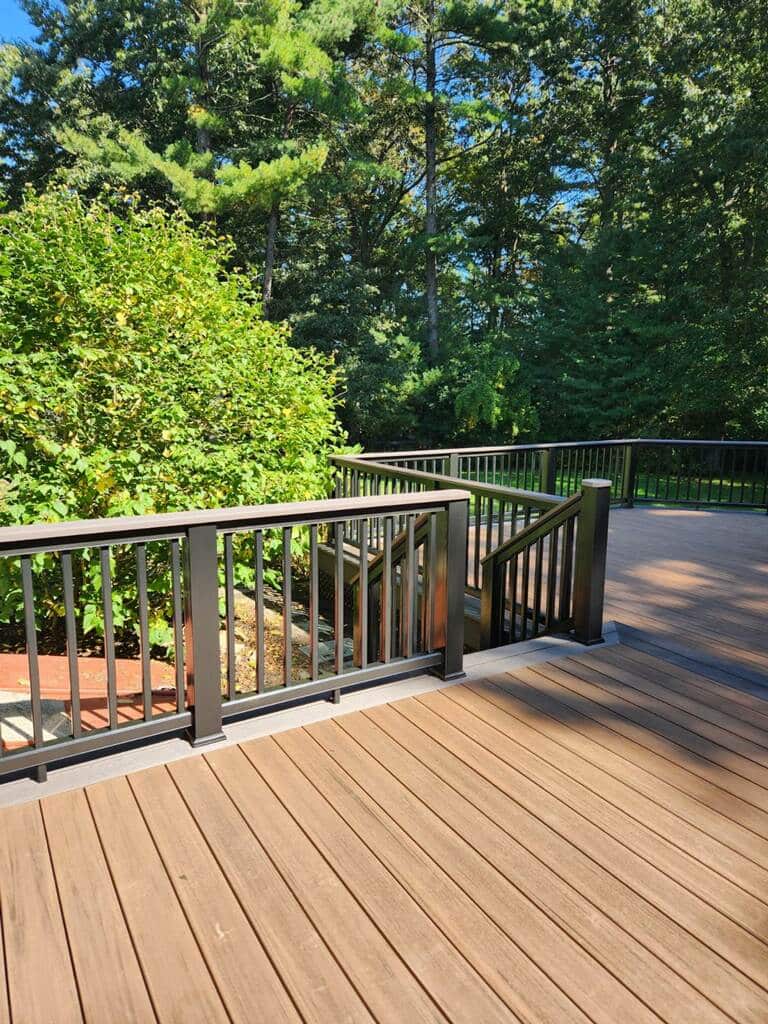
We install AZEK® railing in PVC, composite, and metal — matched to your deck and built to last. These are the lines we work with:
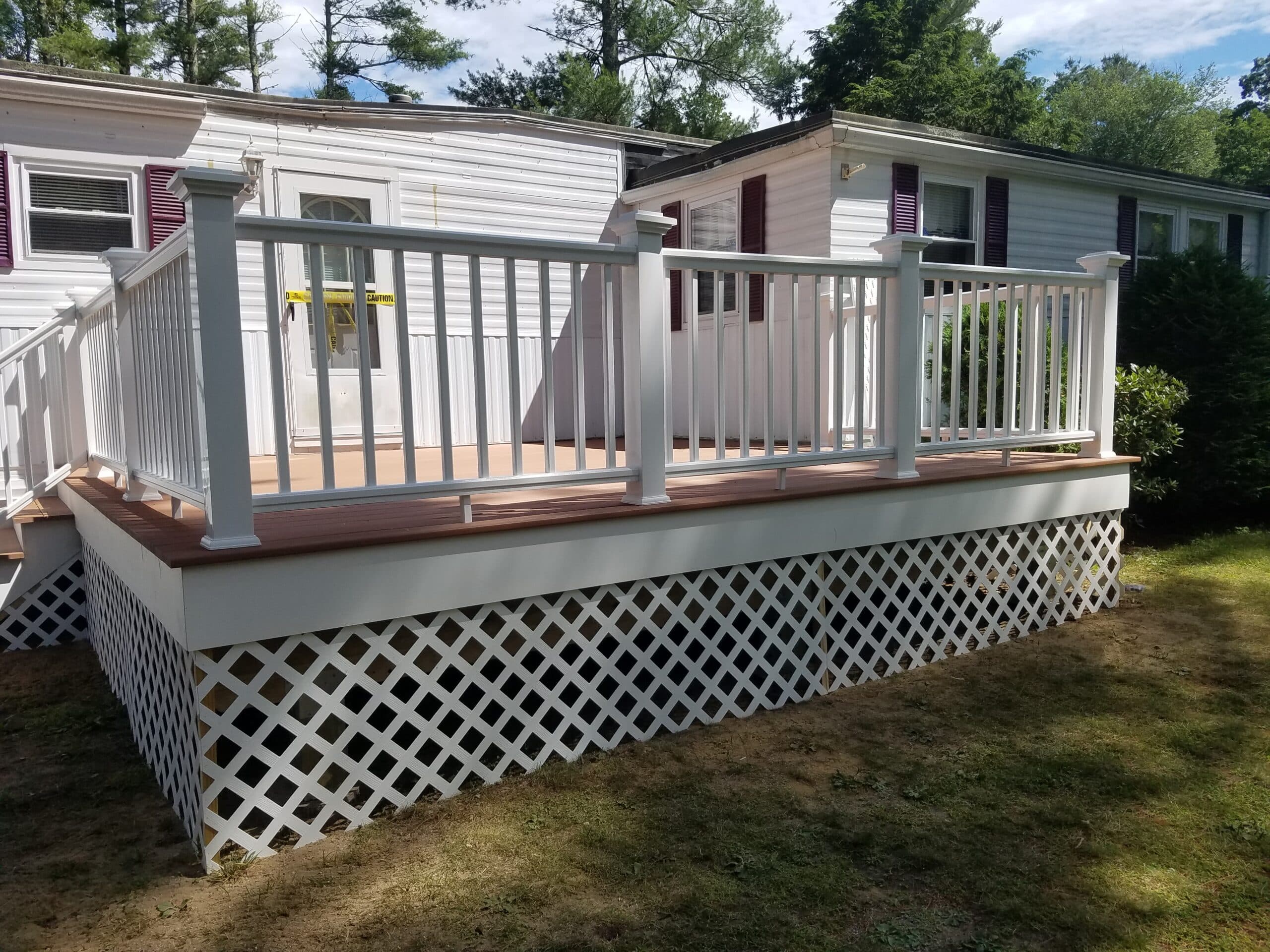
PVC: Pinnacle & Statement
Composite: Premier (the one we install most), RadianceRail, Drink Rail, Trademark & Advantage
Metal: Impression
Vinyl: We don’t install it. No matter the manufacturer, vinyl railing looks cheap — like what you’d see at the big-box stores — with visible, clunky post connections, and it simply doesn’t hold up like PVC, composite, or metal.
TimberTech Aluminum Framing
For the strongest, longest-lasting foundation, we build on TimberTech Aluminum Framing — a naturally non-combustible substructure with a Class A flame spread rating, the highest available, and no chemical fire retardants needed. Precision-engineered joists, beams, posts, and ledgers resist moisture, rust, corrosion, mold, and insect decay, deliver strength comparable to a 2×12 wood joist for longer spans, and carry a lifetime limited warranty on the main components. Made from recycled aluminum, IRC-compliant, and the perfect base for AZEK and TimberTech decking.
Owens Corning Structural Framing
We also build with Owens Corning® Lumber — a rotproof, rustproof, wood-free composite framing reinforced with GLAS-POWERED® fiberglass technology. It won’t rot, warp, crack, split, or splinter like pressure-treated lumber, shrugs off moisture, insects, and ground contact, and stays dimensionally stable through every New England season for fewer callbacks and straighter builds. It’s code-approved, cuts and installs with the same tools as traditional wood, and delivers a stronger ledger connection — the number-one point of deck failure — for a foundation built to last a lifetime.
Premium Materials
Decking Materials We Build With
When it comes to decking materials, we know what stands the test of time here in Massachusetts. Pressure-treated lumber is often the most budget-friendly option, and in some cases, it’s the right fit for a homeowner’s needs. But when longevity, durability, and low maintenance are the priority, there are only two brands we consistently recommend: AZEK® Advanced PVC and Wolf Serenity™ Decking.
Why these two? Because both are 100% cellular PVC decking, meaning they won’t absorb moisture, rot, splinter, or become a maintenance headache down the road. They’re built to handle New England’s harsh weather and can provide decades of worry-free performance. So why offer both if they’re so similar? The answer is simple: color selection and style preferences. Each manufacturer offers unique colors and finishes, giving homeowners more options to match their home’s design.
At DelPrete Home Improvements, AZEK is our most commonly installed PVC decking product, and it’s the same decking many of us have chosen for our own homes. It’s also no surprise that when it comes to PVC trim, AZEK is our go-to choice there as well.
If you’re investing in a new deck and want something that will look beautiful for years to come with minimal maintenance, PVC decking is hard to beat.
Advanced PVC Capped Polymer · AZEK Platinum · Most Popular
AZEK® Advanced PVC
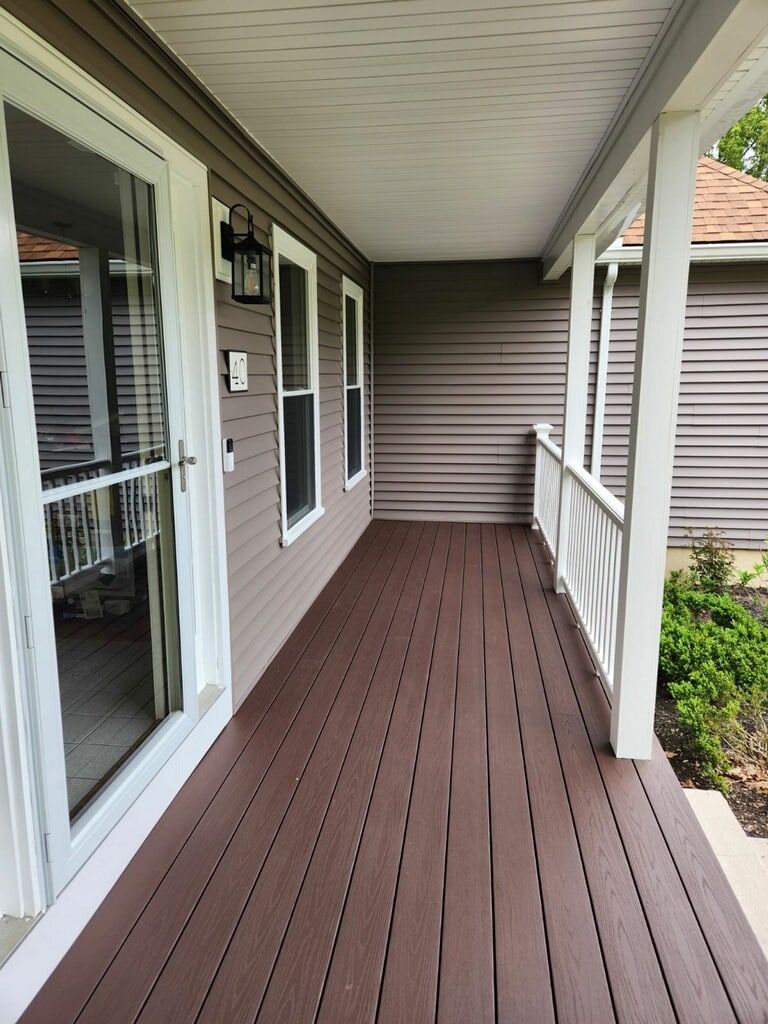
Our flagship decking, and the line we install most. AZEK Advanced PVC is a capped polymer board — 100% cellular PVC with no wood fillers — so it won’t absorb moisture, rot, warp, or splinter, and it never needs sanding or staining. It shrugs off New England weather, stays cooler underfoot than many alternatives, and cleans up with a hose, all backed by some of the strongest warranties in the industry. As an AZEK Platinum contractor — the program’s top tier — our crews install it to manufacturer specification, and it’s the same decking many of us have chosen for our own homes.
- 100% cellular PVC capped polymer — no wood fillers
- Won’t absorb moisture, rot, warp, or splinter
- No sanding, sealing, or staining — ever
- Capped surface resists fading, staining & scratching
- Cooler-to-the-touch options underfoot
- Long-term & lifetime limited warranties
- Realistic, multi-tonal woodgrain finishes
- Wide palette of colors & multi-width boards
- Hidden-fastener systems for a clean surface
- Matching AZEK PVC trim & fascia
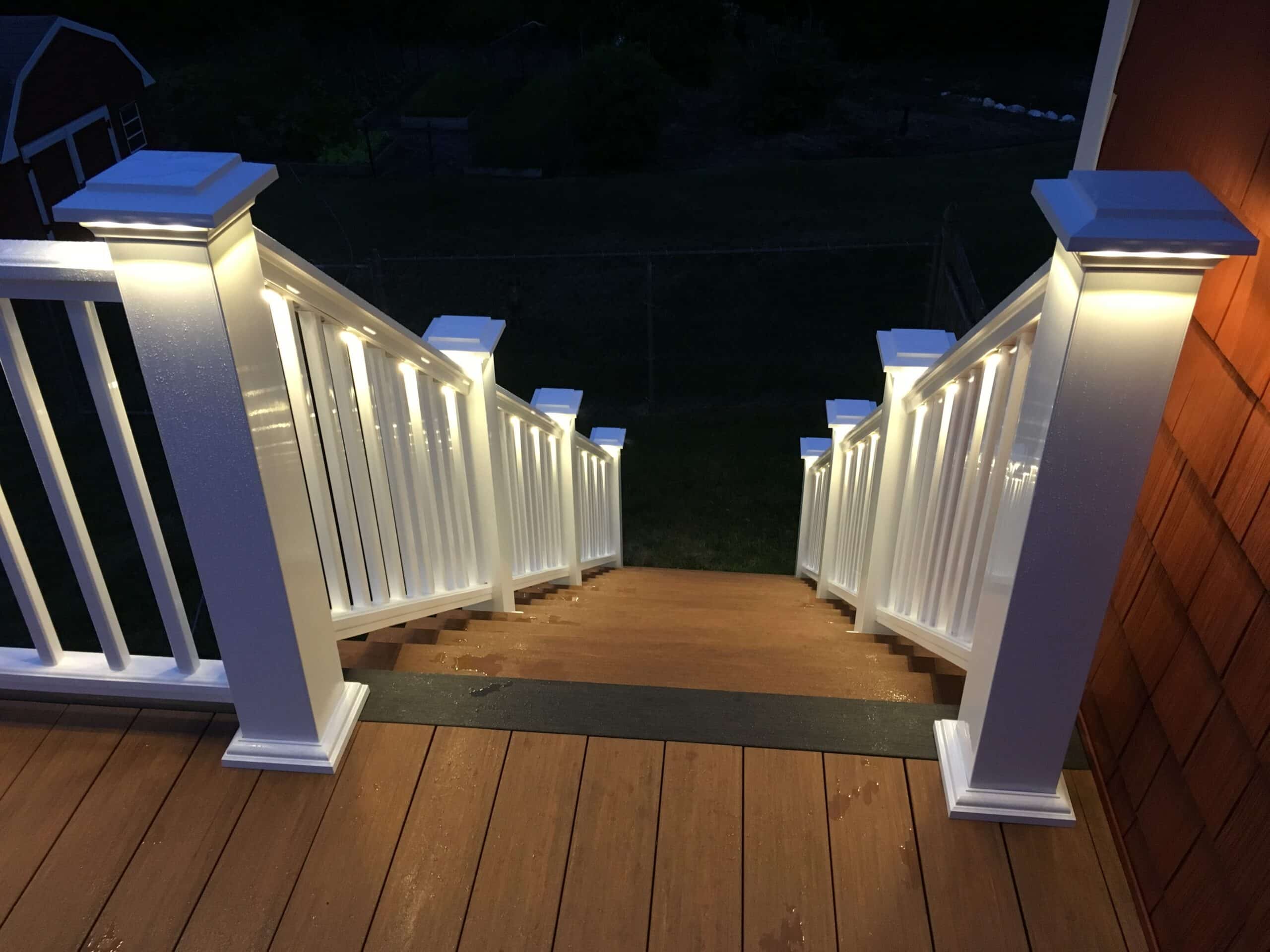
- Coordinated railing & deck lighting
- Built for full decks, porches & rooftop spaces
Cellular PVC Decking · Wolf Pro · Low Maintenance
Wolf Serenity™
Wolf Serenity™ is a 100% cellular PVC decking line — like AZEK, it won’t absorb moisture, rot, splinter, or become a maintenance headache, and it never needs sanding or staining. We offer it alongside AZEK mainly for its distinct colors and finishes, giving you more options to match your home’s design. As a Wolf Pro contractor, we install Wolf decking, trim, and railing to manufacturer specification.
- 100% cellular PVC decking — no wood fillers
- Won’t absorb moisture, rot, warp, or splinter
- No staining or sealing — just an occasional wash
- Distinct color palette & finishes
- Matching PVC trim & railing systems
Pressure-Treated · Best Value
Pressure-Treated
The time-tested, budget-friendly choice. Pressure-treated lumber is the most affordable decking option upfront and, when built on a properly engineered frame, makes a solid, dependable deck. It does require periodic cleaning and sealing to hold its appearance and resist the elements — but for homeowners watching the budget, it’s a proven performer.
- Lowest upfront cost per square foot
- Readily available & field-proven
- Built on a code-compliant frame
- Periodic cleaning & sealing recommended
- Can be stained to the color you want
Genuine Tropical Hardwood · Natural Beauty
Hardwood — Mahogany & IPE
For homeowners who want the unmistakable richness of real wood, nothing matches genuine tropical hardwood. Mahogany offers a warm, fine-grained elegance, while IPE (Brazilian Walnut) is one of the densest, hardest, and most naturally durable decking woods in the world — so dense it naturally resists rot, insects, wear and more drill bits than we like to admit. Both develop a beautiful character over time and, with periodic oiling, hold their deep color for decades.
- Genuine Mahogany — warm tone, fine grain
- IPE (Brazilian Walnut) — extremely dense & hard
- Naturally resists rot, decay & insects
- Exceptional strength & longevity
- Stunning, high-end natural appearance
- Periodic oiling preserves rich color
- Premium hidden-fastener installation
- A true statement outdoor living space
Aluminum Substructure · Fire-Resistant · Premium Framing
TimberTech Aluminum Framing
The strongest, longest-lasting foundation we build on. TimberTech Aluminum Framing is a naturally non-combustible substructure with a Class A flame spread rating — the highest available — and it needs no chemical fire retardants. Precision-engineered joists, beams, posts, and ledgers create a flat, rock-solid base that’s the perfect match for AZEK and TimberTech decking.
- Naturally non-combustible · Class A flame spread rating
- Resists moisture, rust, corrosion, mold & insect decay
- Strength comparable to a 2×12 wood joist for longer spans
- Lightweight & fast to install with fewer fasteners
- Made from recycled aluminum · IRC-compliant
- Lifetime limited warranty on main components
Composite Substructure · Rotproof & Rustproof · Premium Framing
Owens Corning® Structural Framing
A rotproof, rustproof, wood-free composite framing reinforced with Owens Corning’s GLAS-POWERED® fiberglass technology. It won’t rot, warp, crack, split, or splinter like pressure-treated lumber, stays dimensionally stable season after season, and installs with the same tools as traditional wood — for a foundation engineered to last a lifetime.
- Wood-free composite · GLAS-POWERED® fiberglass core
- Won’t rot, warp, crack, split, or splinter
- Resists moisture, insects & ground contact
- Dimensionally stable — fewer callbacks, straighter builds
- Stronger ledger connection — the #1 deck-failure point
- Code-approved · cuts & installs like wood
What's Under Your Deck Matters Most
The decking you see is only half the story. The frame, footings, ledger, and fasteners underneath are what keep a deck safe and standing for decades. We build every substructure to the Massachusetts code — proper footings below frost depth, a flashed and through-bolted ledger, and corrosion-resistant hardware throughout.
Repair or Replace?
Why Repair or Completely Replace Your Deck?
It’s one of the first questions homeowners ask us: can my deck be repaired, or does it need to come down? The honest answer depends entirely on the structure — the framing, ledger, footings, and fasteners hidden beneath the surface. Here’s how the two options compare, so you can make an informed decision about your home and your budget.
Repair & Restore the Existing Deck
Pros
Lower upfront cost; faster turnaround; minimal disruption; a smart choice when the frame, ledger, footings, and posts are sound and already meet code. Ideal for swapping out worn boards and railing or resurfacing with new low-maintenance decking.
Cons
Only works if the structure is genuinely sound — a repair can’t fix undersized framing, an improperly attached ledger, footings that don’t reach frost depth, or widespread rot. Patching over hidden structural problems can leave a deck that looks fine but isn’t safe, and you may pay twice if a rebuild becomes necessary anyway.
Built to Last
Repair & Restore the Existing Deck
Pros
A fresh, fully code-compliant structure from the footings up — correct framing, a flashed and through-bolted ledger, proper lateral-load connections, and corrosion-resistant hardware. You choose the size, layout, decking material, and railing, get the longest possible lifespan, and start the warranty clock fresh on brand-new materials.
Cons
Higher upfront investment and a longer build timeline than a simple repair. But for older decks — or any deck with structural, safety, or code issues — a full replacement is almost always the more cost-effective decision over the life of the deck, and the only way to guarantee it’s truly safe.
A good rule of thumb: if the structure is sound and you mainly dislike how the deck looks, a repair or resurface may be all you need. But if the framing is undersized, the ledger is nailed or attached to siding, the footings are shallow, or there’s rot in the frame, replacement is safer and almost always more cost-effective than chasing repairs.
The DelPrete Difference
Why Homeowners Choose Us
We earn trust the old-fashioned way — by listening, educating, and standing behind our work. Many homeowners aren’t sure which decking material is right for them, how the brands compare, or what a safe, code-compliant deck should actually include. That’s why we focus on educating our customers and helping them make informed decisions with confidence. We build every deck to meet or exceed the Massachusetts Residential Code, take pride in leaving every property clean and protected, and we’re a trusted local contractor with real projects, real reviews, and true accountability to the communities we serve — not a national lead-generation company that disappears after the sale. Here’s what you can expect from start to finish.
1
We Start With How You'll Use It
Every consultation begins with how you actually want to live outdoors — dining, entertaining, grilling, lounging, hot tub, or all of the above. Once we understand the vision, we shape the size, layout, levels, and traffic flow around the way you’ll really use the space.
2
The Right Material for Your Budget
Composite, PVC, pressure-treated, or genuine hardwood — each has trade-offs in cost, maintenance, and longevity. We lay out the honest pros and cons of each so you can match the decking to your budget and how much upkeep you actually want to do.
3
Committed to Sustainability
We’ve partnered with AZEK to recycle all of our scrap PVC, keeping it out of the landfill and turning offcuts back into new building products. It’s a small step on every job that adds up to a real difference. Learn about the program →
4
The Structure Is Never an Afterthought
Looks matter, but safety matters more. We evaluate footings, ledger attachment, framing, and connections on every project, and engineer the substructure to code — not just the prettiest surface in the brochure.
5
Skilled, Supervised Crews
Your deck is built by experienced carpenters and overseen by our onsite Project Manager, so the design you chose is constructed correctly, to spec, and to the manufacturer’s installation requirements for your decking system.
6
Transparent Pricing & Detailed Proposals
Clear, itemized proposals spelling out the decking line, railing, colors, scope, footings, pricing options, and warranties — no surprises, and everything you need to compare with confidence.
Ready to Build Your Dream Deck?
Get a free, no-obligation estimate from your local, licensed deck builder. We'll look at your home and yard, talk through materials and layout, and provide transparent pricing. Call (781) 293-1417 or request an estimate online.
Built to Code
Deck Building Code & Structural Requirements
A deck is a structure that holds your family, your guests, and the weight of New England snow — so how it’s built matters as much as what it’s built with. The Massachusetts Residential Code (based on IRC Section R507) sets clear requirements for decks. Here’s what the code requires — and how we meet or exceed those standards on every project. In Massachusetts, a building permit generally isn’t required for a deck under 200 square feet — but that exemption is narrow, as the conditions below show.
When a deck permit isn’t required in Massachusetts
To legally skip the permit, a deck under 200 square feet must also meet every one of these conditions:
- Low to the ground — less than 30 inches above grade at every point
- Freestanding — not attached to the main house
- Not a required exit — it can’t serve as the home’s required exit door
- Zoning still applies — a local zoning permit may be required even when the building permit is exempt
Miss even one of these conditions and a permit must be filed with your local building department. Either way, we handle the permitting for you.
Permits & Inspection
Code Requires
A building permit and inspection for new deck construction and deck replacement.
We Handle
All permitting, scheduling, and inspection coordination. We manage the entire process so you don’t have to deal with town hall or worry about compliance.
Safety critical
Ledger Attachment
code requires
The ledger fastened to the home’s band joist with lag screws or through-bolts per IRC R507.9 — never nails alone, and never to siding alone.
We Install
The ledger through-bolted or lag-screwed to the structural band joist on the proper fastening schedule. Improper ledger attachment is the single leading cause of deck collapse, so we build this connection exactly to spec every time.
Flashing
Code Requires
Corrosion-resistant flashing where the deck attaches to the house (IRC R703.4) to keep water off the band joist.
We install
Proper ledger flashing integrated with the home’s water-resistive barrier so rain can’t get behind the ledger and rot the framing it’s bolted to — a step many contractors skip.
Lateral Load Connection
Code Requires
A separate lateral-load connection (IRC R507.9.2) — hold-down tension devices rated at no less than 1,500 lb, in at least two locations.
We Handle
Hold-down hardware tying the deck’s framing to the home’s floor framing, in addition to the ledger bolts. This separate connection resists the deck pulling away from the house — something lag bolts alone cannot do.
Footings & Frost Depth
Code Requires
Footings that bear on undisturbed soil below the local frost line — commonly 48 inches in Massachusetts.
We install
Properly sized footings poured below frost depth, with approved post bases and post-to-beam hardware. Shallow footings heave and shift during freeze-thaw cycles — ours are built to stay put.
Guards, Stairs & Hardware
Code Requires
Guards at least 36 inches high where the deck is over 30 inches above grade, balusters that block a 4-inch sphere, compliant stair risers and treads, and corrosion-resistant fasteners.
We install
Code-height guards with proper baluster spacing, correctly proportioned stairs and handrails, and hot-dipped galvanized or stainless hardware rated for modern pressure-treated lumber so connections don’t corrode.
Safety Critical
Why the Ledger & Structural Connection Matter So Much
The most dangerous deck failures we see have nothing to do with the decking on top — they come from how the deck is connected to the house and the ground. A ledger nailed on instead of bolted, fastened to siding instead of the band joist, or installed without flashing is the number-one cause of deck collapse, and the rot that follows missing flashing hides inside the wall for years before anyone notices.
The Massachusetts code (IRC R507) is specific about it: ledger boards must be positively attached to the structure with lag screws or through-bolts, flashed to keep water out, and backed by a separate lateral-load connection that resists the deck pulling away from the home. Footings must reach below frost depth, and connections must use corrosion-resistant hardware.
Unfortunately, plenty of decks get built with shortcuts buried in the frame — they look fine on day one but aren’t safe to stand on. We build the whole structure — footings, ledger, flashing, lateral connections, and hardware — to code on every job, so your deck is as solid underneath as it is beautiful on top.
Our work
Recent Deck Projects
See how a new deck transforms how a home lives, looks, and feels, across projects all over Eastern Massachusetts.
Compare Materials
Decking Materials at a Glance
Six options, one easy comparison. Match the right decking to your home, your budget, and how much maintenance you want to take on.
| Feature |
|
Wolf | Trex | Mahogany | IPE | Pressure- Treated |
|---|---|---|---|---|---|---|
| Material | Capped polymer & composite | Capped PVC & composite | Capped composite | Tropical hardwood | Tropical hardwood | Treated softwood |
| Look & Finish | Realistic multi-tonal woodgrain | Woodgrain PVC/composite | Woodgrain composite |
Warm natural wood |
Rich natural wood |
Natural, stainable |
| Maintenance | Very low — wash only |
Very low |
High | Periodic oiling | Periodic oiling | Regular sealing |
| Relative Lifespan | Longest — lifetime-class warranties |
Long |
<20 years — tends to crumble |
Long with care |
Very long — extremely dense |
Shortest of the group |
| Stand-Out Strength | Top-tier durability & lowest upkeep |
Great low-maintenance value |
Well-known — 1st of its kind to hit the marketplace |
Elegant, fine-grained beauty |
Hardest, most durable natural wood |
Lowest upfront cost |
Looking for pricing?
Curious what a new deck might cost? Pricing depends on the size and height of the deck, the decking material, the railing system, footings and framing, stairs, and any built-in features. The fastest way to a real number is a free onsite estimate — learn more on our Decks page.
How It Works
Our Deck Building Process
A transparent, stress-free process from first conversation to final walkthrough. Here’s what to expect when you choose DelPrete for your deck project
1
Free Consultation & Deck Assessment
Every great deck starts with an honest look at your home, your yard, and how you want to use the space. If you have an existing deck, we inspect the structure to determine whether a repair or a full replacement makes more sense and to provide an accurate scope of work.
Our assessment includes evaluating:
- How you'll use the deck — dining, entertaining, lounging, hot tub, and more
- Best size, shape, height, and number of levels for your home and yard
- The condition of any existing frame, ledger, footings, and posts
- Signs of rot, improper ledger attachment, or shallow footings
- Which decking material fits your style, budget, and maintenance preference
- Railing, lighting, stair, and built-in feature options
- Footing, frost-depth, and structural requirements for your site
- Permit and code requirements
Because we build decks all over Eastern Massachusetts every year, we can quickly identify the most cost-effective approach for your home, explain any challenges upfront, and make sure there are no surprises once work begins.
Duration: About 1 hour
Cost: Free
2
Detailed Estimate & Material Selection
You’ll receive a comprehensive written estimate — giving you the information, transparency, and documentation needed to make a confident, informed decision.
Your consultation package includes:
- Detailed written price proposal
- Recent customer references
- Financing information and options
- Copies of our Massachusetts state licenses, plus how to verify a contractor's license online
- Massachusetts permit requirements and project compliance information
- Copy of our insurance certificate
- Copy of our OSHA-approved safety plan
- Manufacturer product literature for the decking and railing lines recommended for your project
- Warranty information for the products recommended, plus our workmanship warranty
We believe homeowners deserve complete transparency, honest education, and clear documentation — not high-pressure sales tactics.
Timeline: 7–10 days based on complexity
3
Permitting & Material Ordering
Once you approve the estimate, we prepare a detailed formal contract along with all accompanying project documentation required for your installation.
In Massachusetts, any home improvement project exceeding $1,000 legally requires a written contract to protect both the homeowner and contractor. Our contracts clearly outline the full scope of work, materials, warranties, expectations, payment terms, and all applicable consumer protection information so there are no surprises.
After the required 3-day rescission period has passed, your deposit is processed and we begin scheduling, pulling the building permit, and ordering your decking, railing, framing, and hardware.
We believe professionalism, transparency, and proper documentation matter just as much as the quality of the build itself.
Timeline: 1–3 weeks
4
Professional Construction
As your build date approaches, our communication will increase to keep you informed every step of the way. We believe homeowners should always know what to expect before, during, and after their project.
On the day construction begins, our crews and onsite Project Manager arrive promptly to start work. We set footings below frost depth, build the framing and a properly flashed, code-compliant ledger and lateral-load connection, and then install your decking, railing, stairs, and finishing details. Project timelines vary with the size and complexity of the deck, but our team works efficiently to minimize disruption while maintaining the highest standards of craftsmanship.
Throughout the build, we take extensive measures to protect your home, landscaping, walkways, and surrounding property while maintaining a safe, organized, and professional job site. If any hidden conditions are discovered — such as rot at the band joist or unexpected soil conditions — we address them properly before continuing, and you’ll be informed immediately so there are never any surprises.
Our onsite Project Manager oversees the project from start to finish, ensuring proper construction techniques, code compliance, manufacturer specifications, quality workmanship, jobsite cleanliness, and clear communication throughout the entire process.
Duration: Varies based on project size and scope
5
Final Inspection & Walkthrough
Once construction is complete, our onsite Project Manager performs a comprehensive final quality-control inspection to ensure every aspect of the deck meets our standards for craftsmanship, safety, and appearance. We verify that the framing, ledger, footings, connections, decking, railing, stairs, and lighting are properly built, secured, and finished, confirm all hardware is correct and corrosion-resistant, and coordinate the required municipal building inspection. Finally, the entire area is cleaned and all debris is removed so your yard looks as good as your new deck.
We then complete a final walkthrough with you to review the finished work, show you how to care for your new deck, answer any questions, and make sure you’re 100% satisfied. A Certificate of Completion is signed and final payment is collected.
After the project, our office processes and registers your applicable manufacturer warranties. Copies of your warranty documentation and final paperwork are typically provided within 1–2 weeks.
Duration: 30 min
Common Questions
Frequently Asked Questions
How much does a new deck cost in Massachusetts?
Deck cost depends on the size and height of the deck, the decking material (pressure-treated is the most budget-friendly, with composite, PVC, and tropical hardwood at higher tiers), the railing system, framing and footing requirements, stairs, and any built-in features. We provide free, transparent onsite estimates so you know exactly what you are paying for before any work begins.
Is composite or wood decking better?
It depends on your priorities. Capped composite and PVC decking from AZEK, TimberTech, and Wolf resists fading, staining, rot, and splintering and never needs sanding or staining — just an occasional wash. Pressure-treated lumber is the most affordable upfront but requires regular sealing and has a shorter lifespan. Genuine hardwoods like Mahogany and IPE deliver unmatched natural beauty and density but need periodic oiling to hold their color. Our free assessment helps you weigh upfront cost against long-term maintenance and lifespan.
Do you replace old deck framing or just the boards?
We evaluate every deck individually. If the existing frame, ledger, footings, and posts are sound and code-compliant, resurfacing with new decking and railing can be a cost-effective option. But many older decks have undersized framing, an improperly attached ledger, footings that don’t reach frost depth, or hidden rot — in which case a full rebuild is the only safe, code-compliant solution. We inspect the structure honestly and recommend what actually protects your family.
Do I need a permit to build or replace a deck in Massachusetts?
Yes. Building a new deck or replacing an existing one requires a building permit and inspection in Massachusetts. We handle all permitting and scheduling, and build every deck to the Massachusetts Residential Code (based on IRC Section R507), including ledger attachment, lateral-load connections, footing depth, guards, and stairs — so your deck passes inspection and stays safe for decades.
Why is ledger board connection so important?
The ledger — the board that attaches the deck to your house — is the single most common point of deck failure. Code (IRC R507.9) requires it to be fastened to the home’s band joist with lag screws or through-bolts, never nails and never to siding alone, with corrosion-resistant flashing behind it and a separate lateral-load connection. Improper ledger attachment is the leading cause of deck collapse, which is exactly why we build this connection to spec on every job.
How long does it take to build a deck?
It depends on the size and complexity of the deck, but most builds run a number of days on site. The full process — from your free consultation, to a written estimate (typically 7–10 days), permitting and material ordering (about 1–3 weeks), construction, and the final inspection and walkthrough — usually spans a few weeks. We give you a realistic timeline for your specific project upfront.
What is the lowest-maintenance decking?
100% cellular PVC decking is the lowest-maintenance option we install. AZEK® Advanced PVC and Wolf Serenity™ never need sanding, staining, or sealing — they won’t absorb moisture, rot, or splinter, and they clean up with a hose. Pressure-treated lumber and natural hardwoods like Mahogany and IPE are beautiful but require regular sealing or oiling to hold up.
Do you build pool decks?
Yes. Pool decks have their own building code requirements — from railing and barrier heights to self-closing, self-latching gates — so they have to be built and permitted differently than a standard deck. We pull the permits and complete the inspections so the finished space is safe for everyone.
What kind of framing do you build decks on?
Every deck sits on an engineered, code-compliant frame. Beyond traditional pressure-treated framing, we offer two premium non-wood substructures: TimberTech Aluminum Framing, which is naturally non-combustible with a Class A flame spread rating, and Owens Corning® structural composite framing, which is rotproof, rustproof, and dimensionally stable. Both outlast wood and resist the moisture, rot, and insect issues that cause most deck failures.
Do I need a permit for a small deck in Massachusetts?
In Massachusetts, a building permit generally isn’t required for a deck under 200 square feet — but only if it is also less than 30 inches above grade at every point, freestanding (not attached to the house), and does not serve as a required exit. A local zoning permit may still apply. If a deck misses even one of those conditions, a permit is required — and either way, we handle the permitting for you.
Want to see and feel the decking in person?
Visit our showroom at 201 West Grove St, Middleboro, MA to see decking samples up close, compare AZEK, TimberTech, Wolf, and hardwood side by side, feel the railing options, and speak with our deck experts. Open weekdays 8am–5pm; weekends by appointment.